Customer complaint
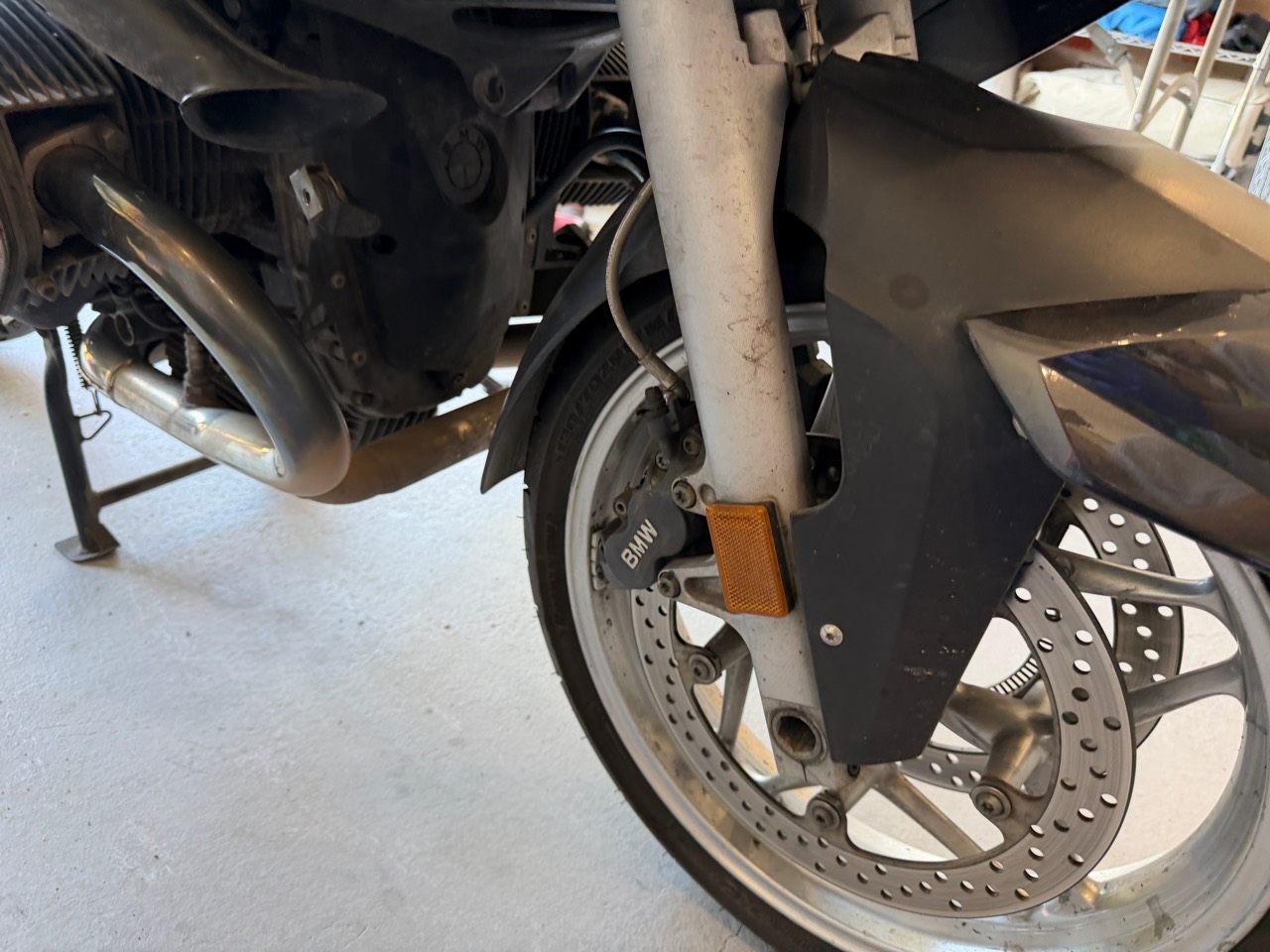
The rider reported brake warning issues and unreliable brake behavior. On this generation of BMW, a failing servo-assisted iABS unit can cause ABS lights, weak or delayed brake assist, inconsistent lever feel, or brakes that do not respond the way the rider expects.
Why these iABS systems fail
The early BMW servo/iABS module is a precise electro-hydraulic assembly with internal pumps, valves, sensors and electronic control. As these units age, moisture, contamination, worn internal parts or electrical faults can make repair difficult and expensive.
Repair decision
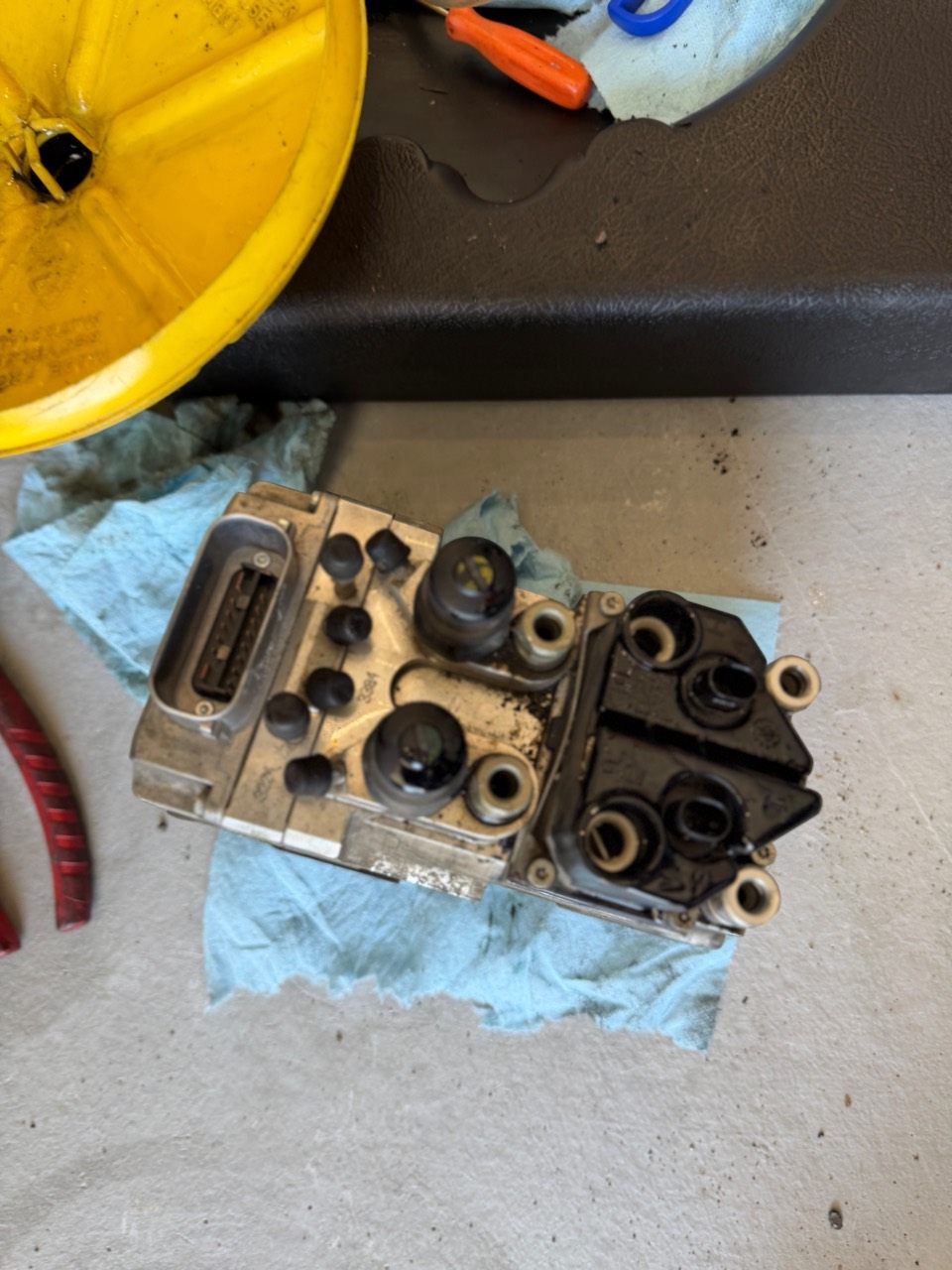
For this motorcycle, replacing or rebuilding the ABS unit was not the practical route. The chosen repair was an iABS bypass: the ABS modulator was removed from the hydraulic brake circuit and the bike was converted to conventional non-ABS braking.
Work performed
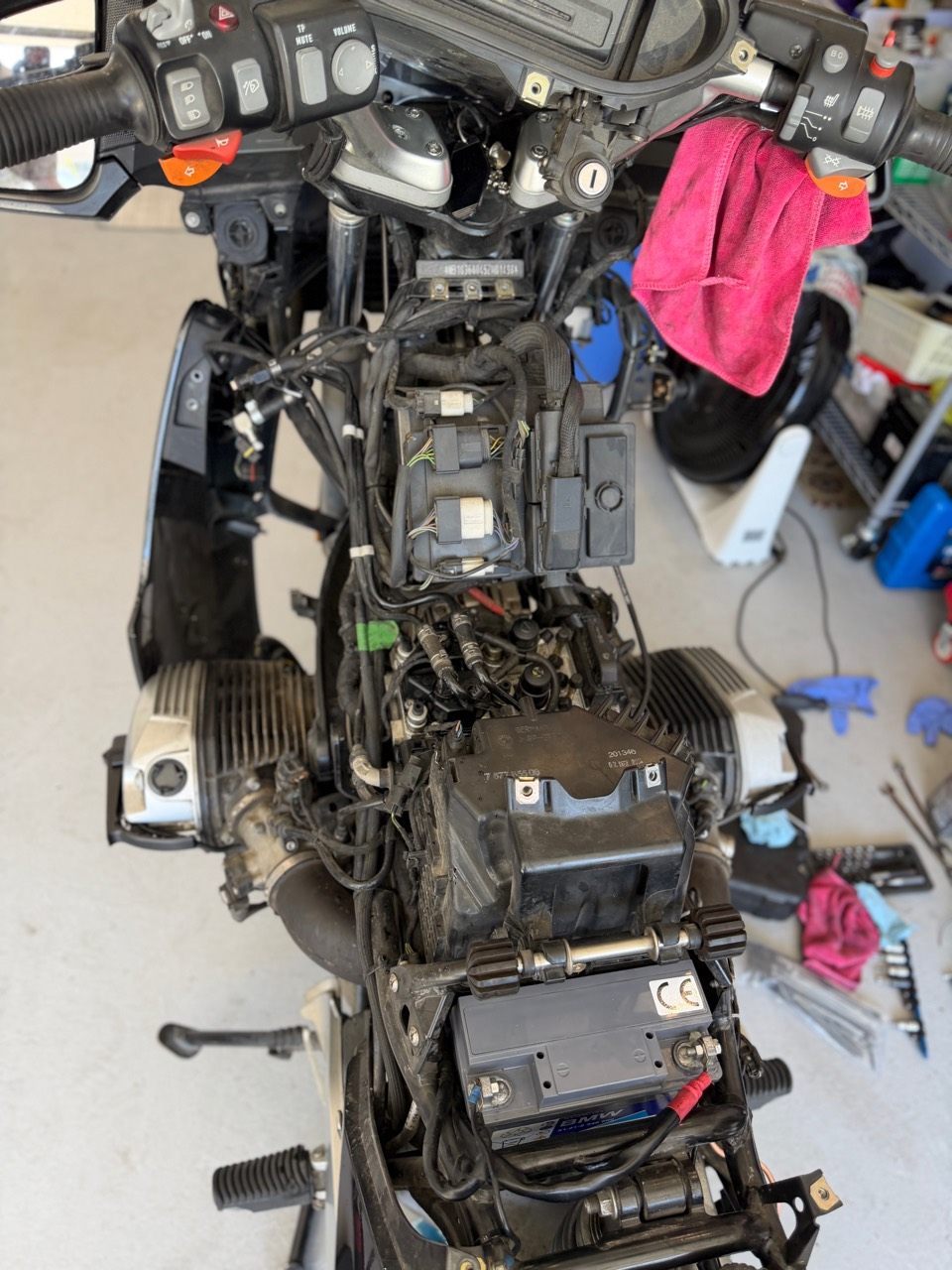
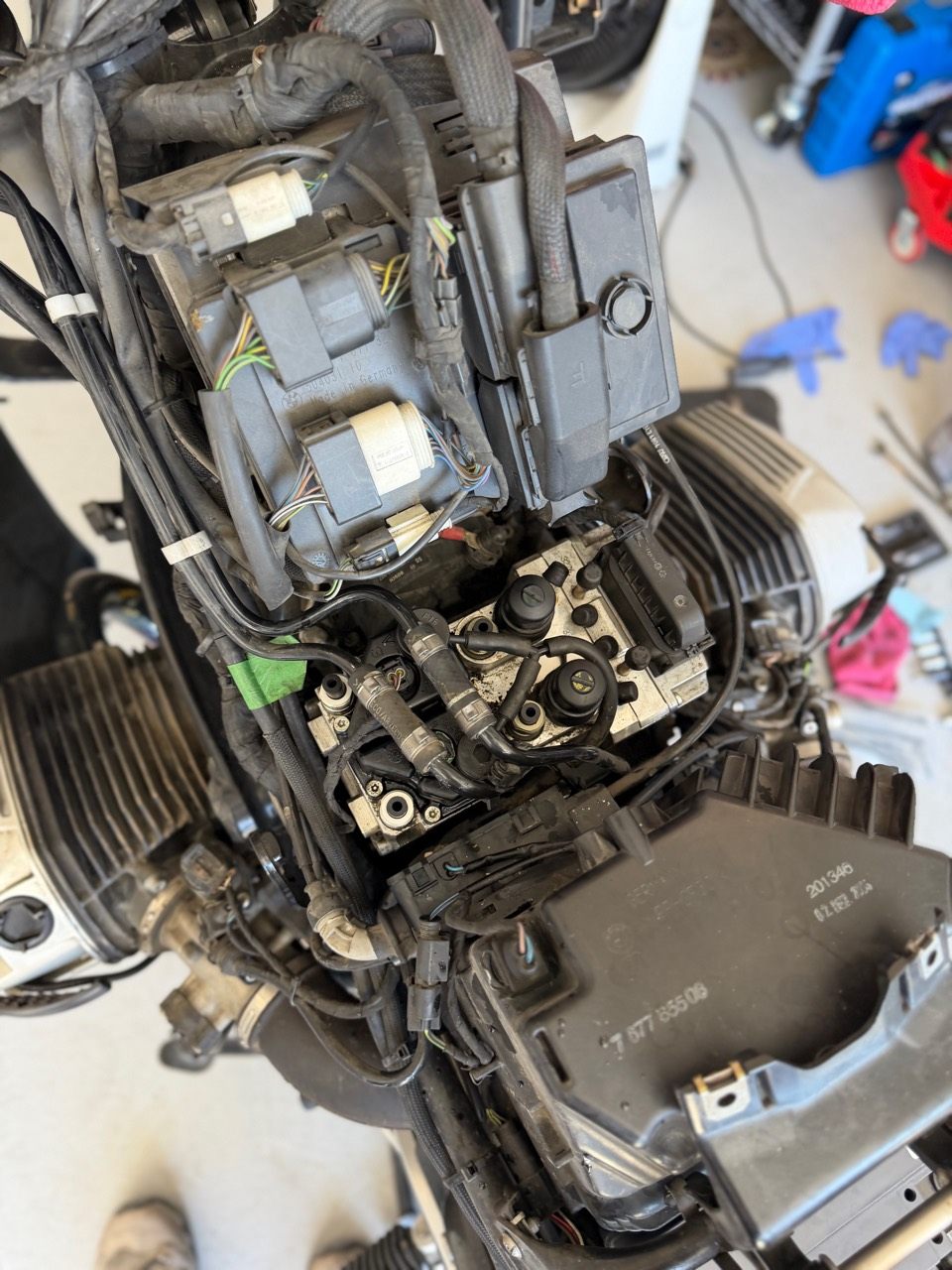
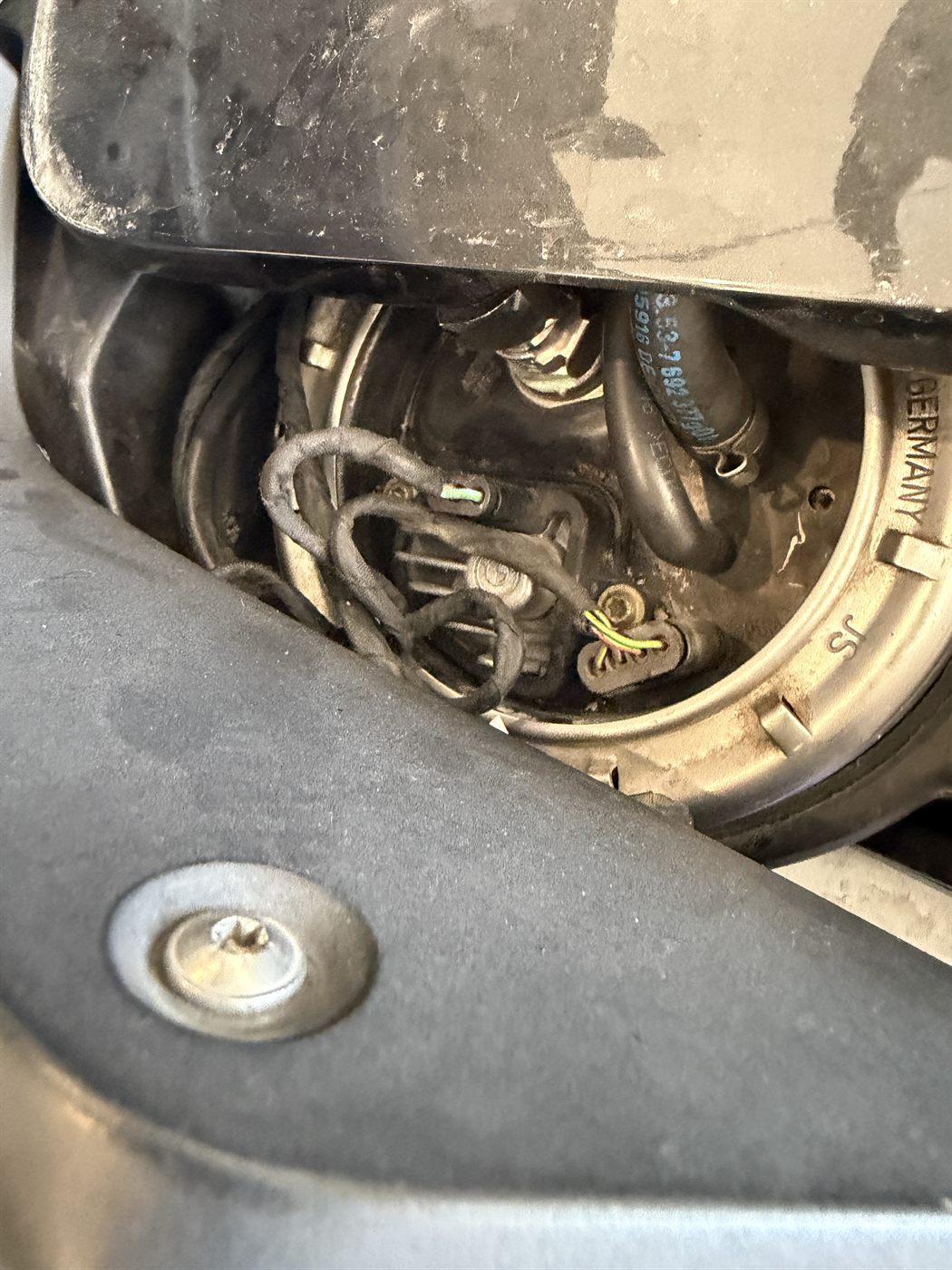
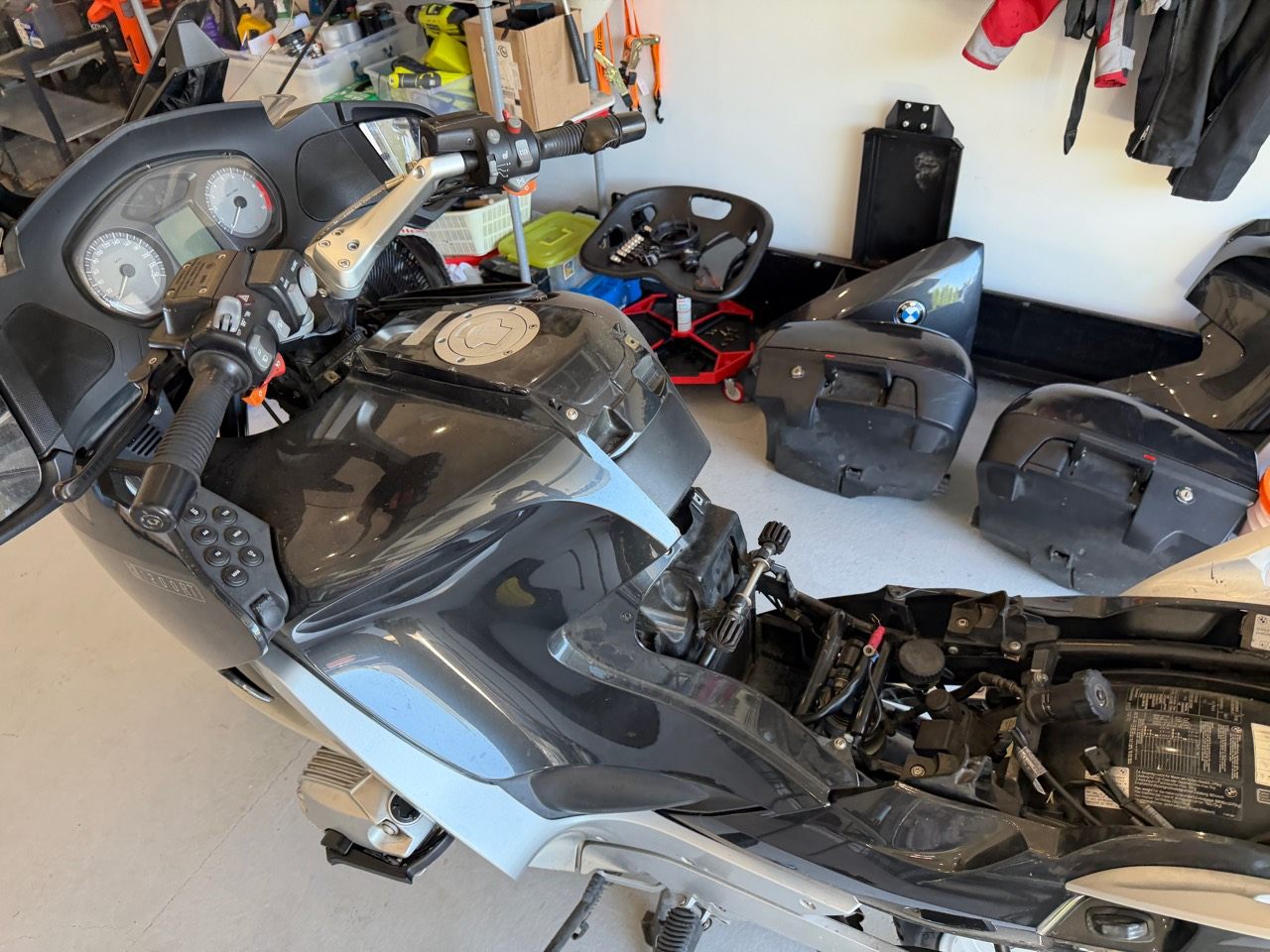
The bodywork and service panels were removed for access. The ABS hydraulic unit was disconnected, the brake lines were rerouted to bypass the modulator, and the front and rear brake circuits were bled and checked. The goal was predictable hydraulic brake feel without relying on the aging servo-assisted ABS unit.
Result
After the bypass, the motorcycle had a direct conventional brake setup. This does remove ABS function, but it also removes the risk of relying on an aging iABS unit that may behave inconsistently.
Important note
ABS bypass is not the right repair for every motorcycle or every rider. Brake system work must be inspected carefully, bled correctly and tested before the motorcycle is returned to service.
Takeaway for BMW R1200 owners
If an older R1200 RT, GS or GSA shows ABS warning lights, pump faults, unusual lever feel or inconsistent brake assist, the brake system should be diagnosed before regular riding. Some bikes are candidates for ABS repair, while others may be better suited to a documented bypass conversion.
Repair Photos