Diagnose before replacing parts
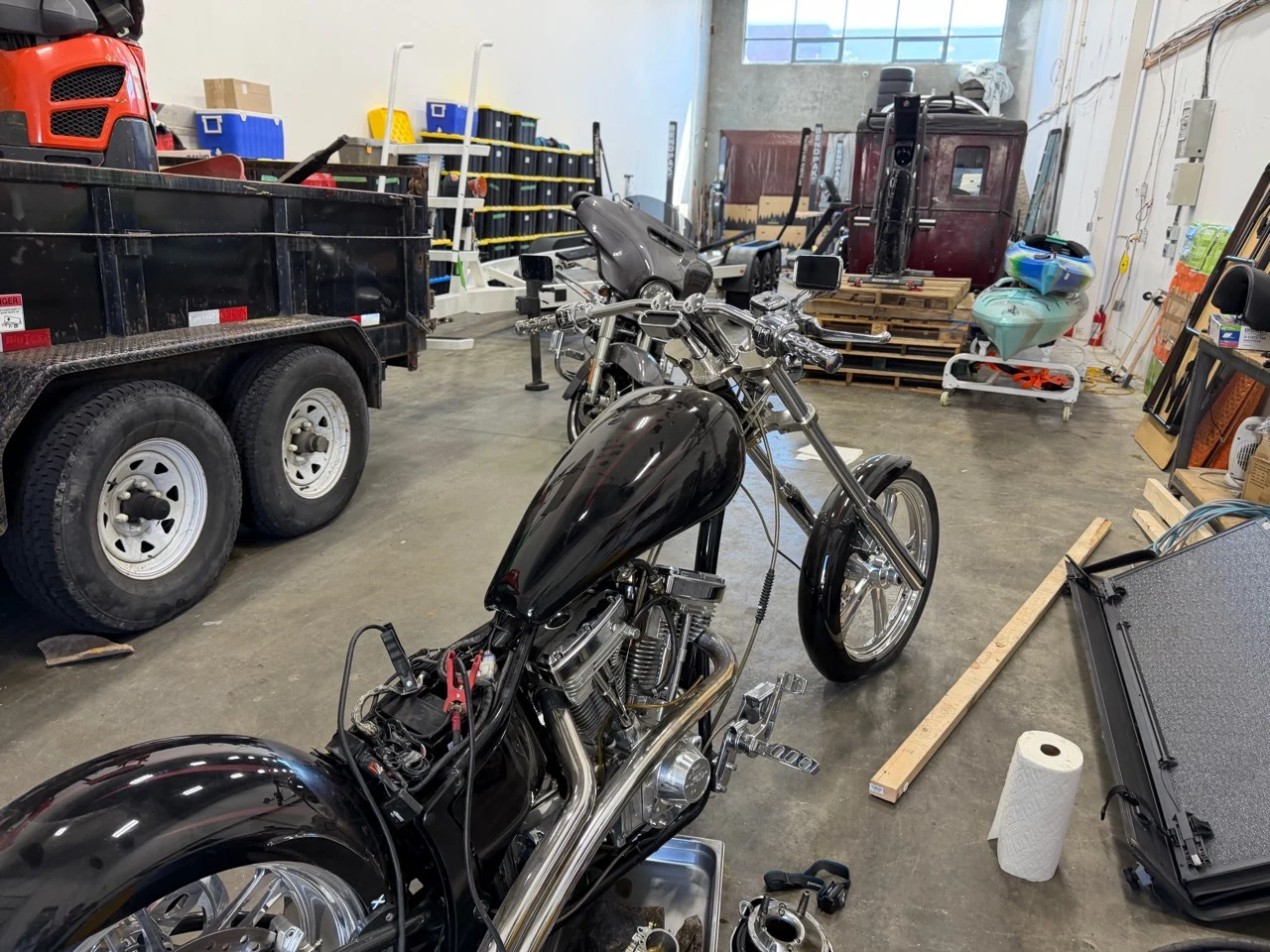
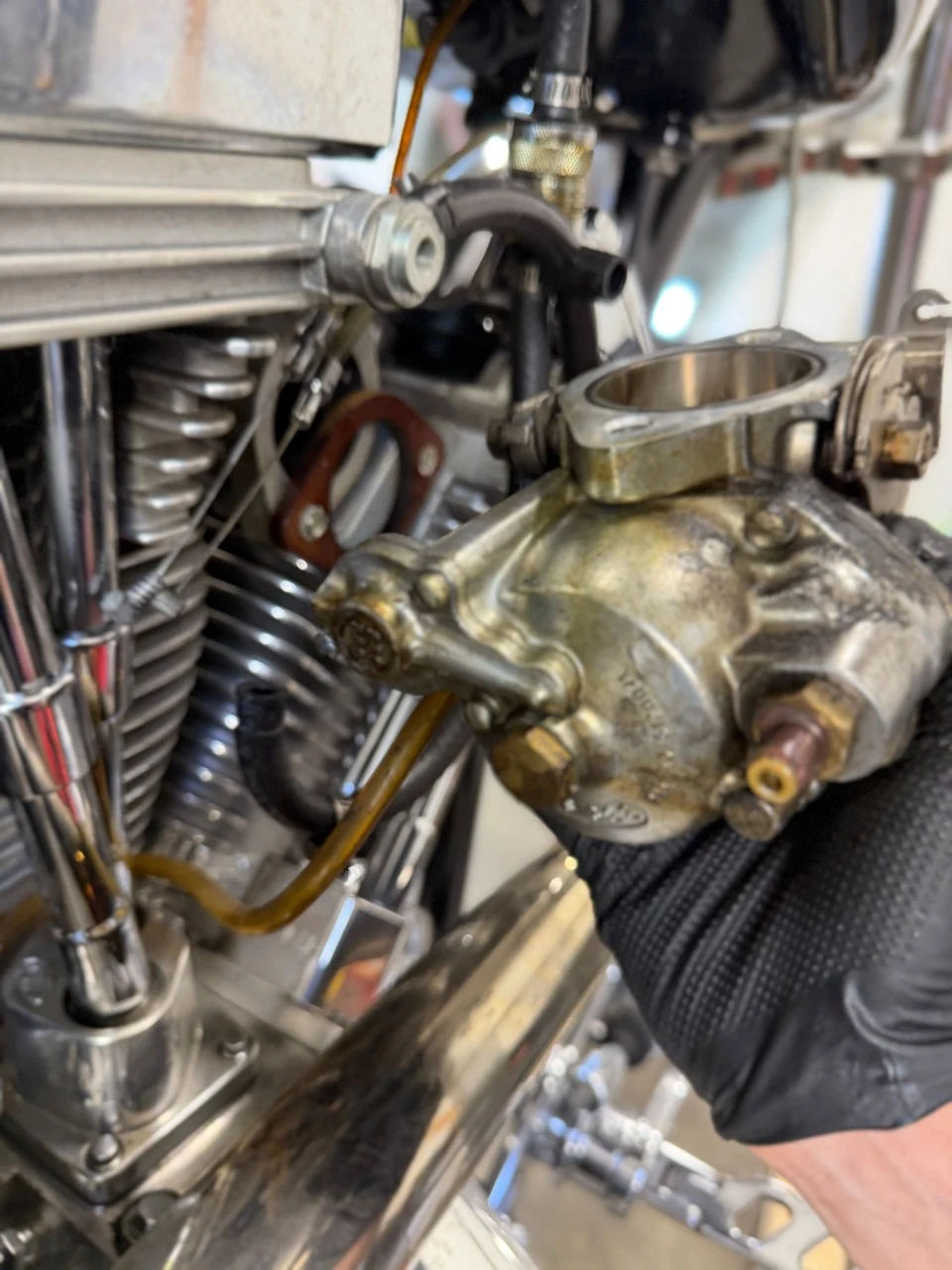
We started with an on-site inspection instead of guessing. The oil discharge during cranking was consistent with a long-storage oil-migration issue, with oil being pushed out through a lower vent or overflow area. The no-start condition was diagnosed separately. Fuel and ignition checks led us to the carburetor, which was not delivering fuel correctly after years of sitting. Keeping those two symptoms separate was important: the carburetor explained why the engine would not start, but it was not blamed for the oil underneath the bike.
Remove, inspect and rebuild the carburetor
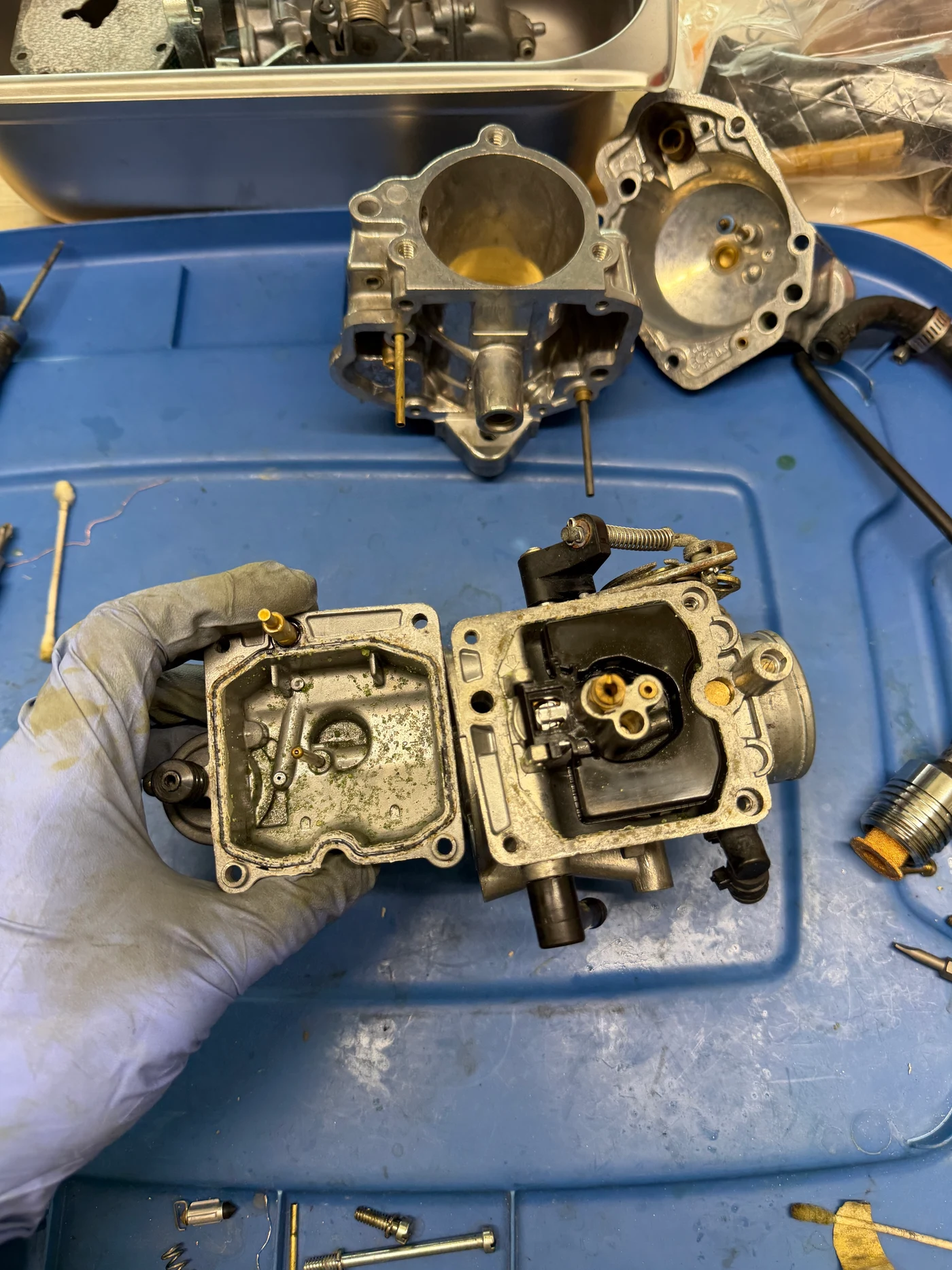
The carburetor was removed, opened and carefully inspected. Inside, we found a heavy buildup of residue and debris from aged fuel. The bowl, jets and small internal passages were cleaned, including professional ultrasonic cleaning, before the components were checked and reassembled. This is the detail that matters on a stored motorcycle: a carburetor can look acceptable from the outside while its smallest fuel circuits remain restricted inside.
Reassemble, service and verify the result
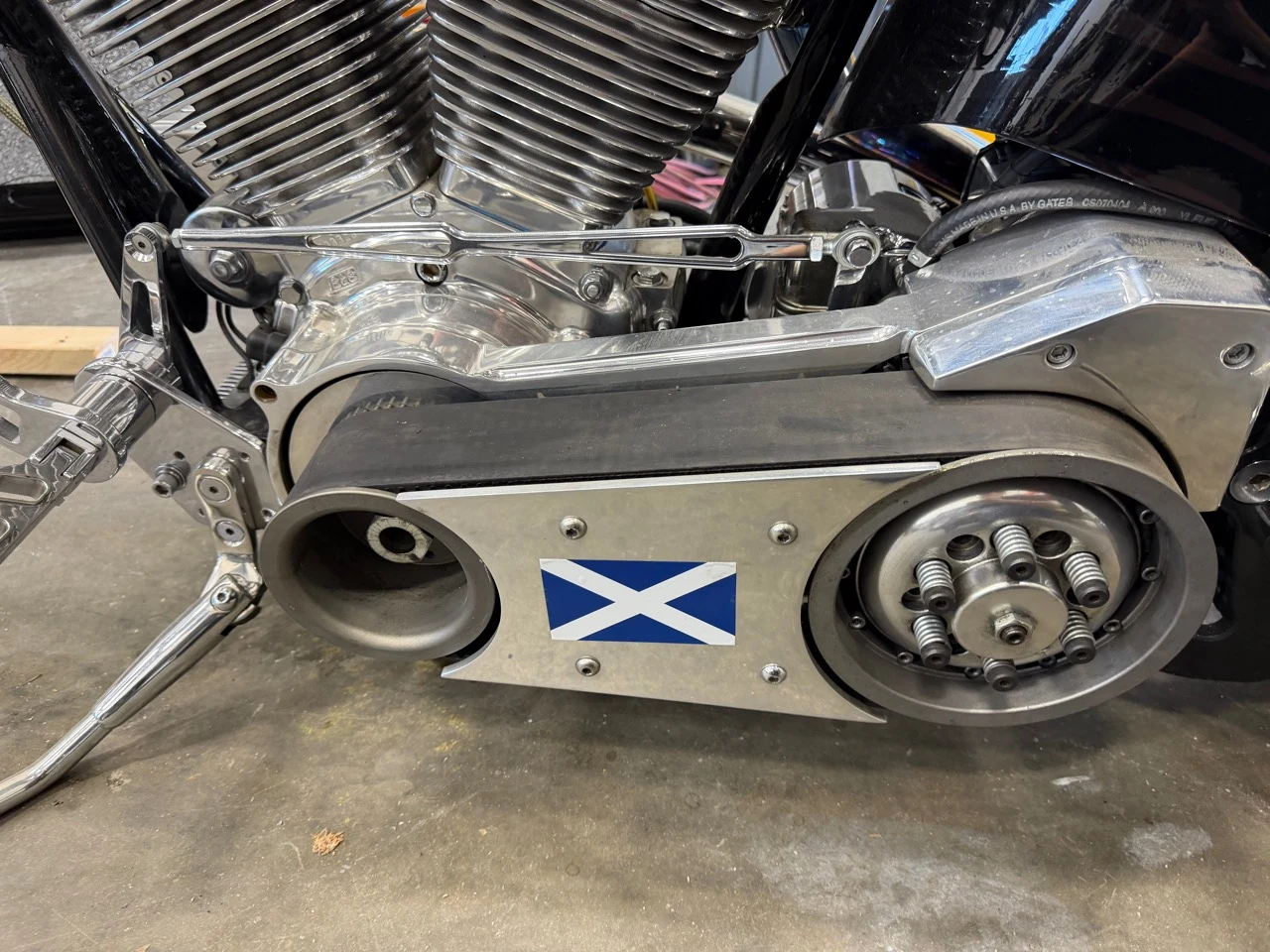
After the cleaned carburetor was installed, the Big Bear Chopper started immediately. We then completed a full recommissioning service, replacing the engine oil and transmission fluid and checking the motorcycle after it reached operating temperature. It was back to starting and running well. One detail that is impossible to miss is the enormous exposed belt drive—an impressive piece of engineering that gives this custom chopper much of its character.
Repair Photos